

The Orientation Week

“Everything about the orientation helped prepare me for my internship. I knew almost nothing about the science of geophysics before going to New Mexico and I feel that what I learned there made it possible for me to understand and think critically about what I learned during my internship.”

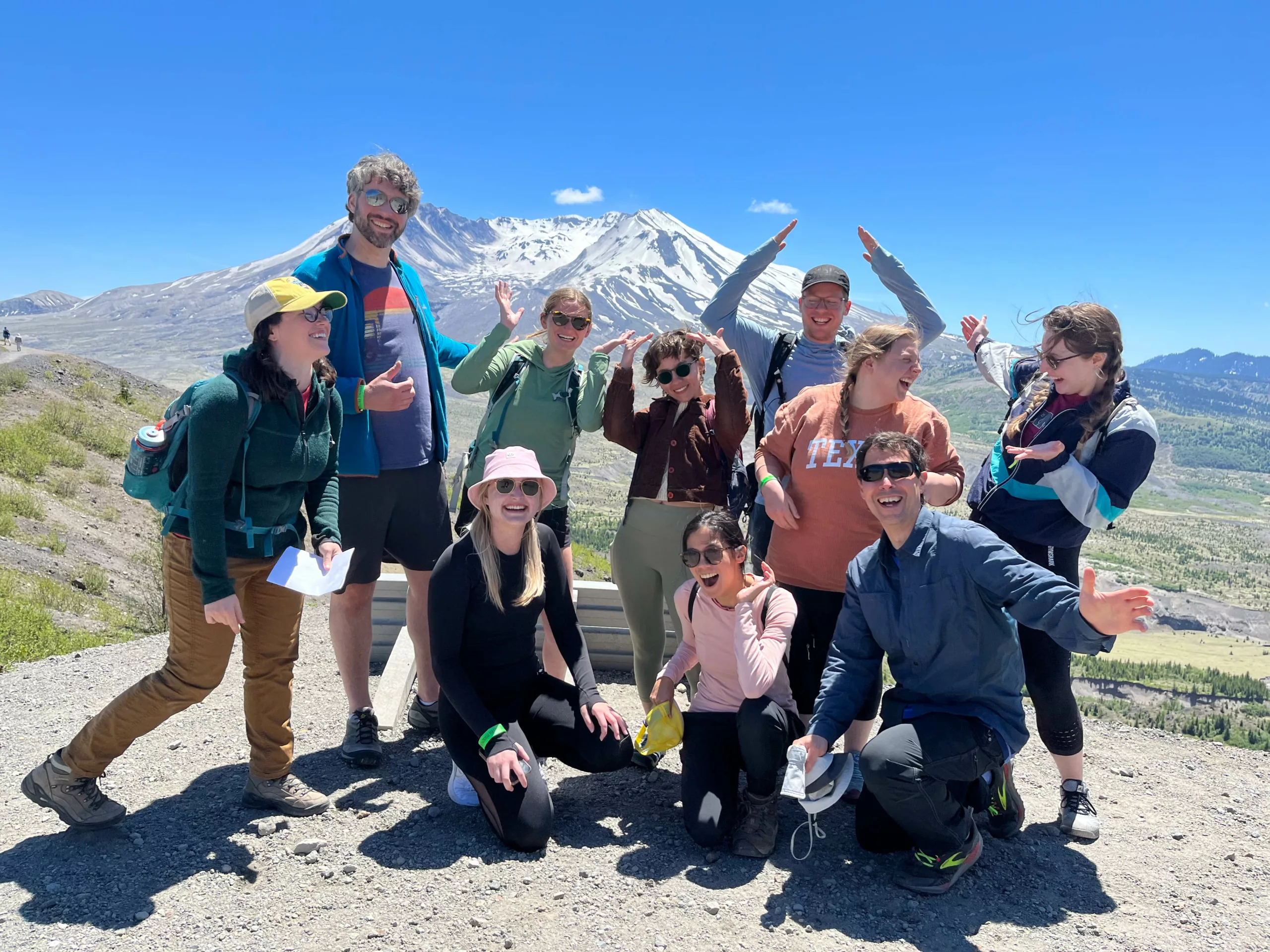
Goal 2009 IRIS interns starting hike at the top of Mt. Baldy

To develop a strong sense of community among the interns and provide an introduction to some of the most exciting aspects of modern seismology.

Date

May 31 - June 4, 2010 with travel days on May 30th and June 5th.

Location

New Mexico Institute of Mining and Technology (NMT) about 1.5 hours south of Albuquerque, NM. The beautiful campus of NMT has again been selected as the site for the internship orientation. Its location for excellent opportunities for field experiences along the Rio Grande Rift Valley while its superb research and computational facilities provide excellent classroom and lab spaces for academic work. Additionally the IRIS PASSCAL Instrument Center facility is hosted on campus providing convenient access to a the latest in seismic technology.

Staffing

During the week, visiting seismologists from across the IRIS community donate their expertise to lead in-depth laboratory exercises and artful lectures/discussion sessions. Local faculty from the NMT Department of Earth and Environmental Science volunteer to lead a variety of field excursions to collect active source seismic data and explore the relationship to regional and local scale geologic structures and the tectonics of western North America.

Rick Aster guides IRIS interns on a tour of the IRIS PASSCAL Instrument Center

The staff for 2010 currently includes;

Richard Aster, NMT
Nelia Dunbar, NMT
Michael Hubenthal, IRIS Consortium
Beatrice Magnani, University of Memphis
Peter Mozley, NMT
Rob Porritt, UC Berkley & Program Alumnus (Class of 2006)
Cathy Snelso, NMT
Seth Stein, Northwestern Unveristy
John Taber, IRIS Consortium


Orientation Week Activities

Classroom

2009 Intern David Oakley examines his MatLab script


Classroom sessions introduce interns to a variety of topics including: history and theory of seismology, earthquakes and earth structure, geophysical inverse theory, general reflection and refraction theory, and seismological data collection and seismic processing. Lab sessions introduce interns to the basics of the UNIX operating system as well as other computer programs students are likely to encounter (e.g. MatLab, GMT and ProMax), and research-grade field equipment identical to that used by NSF and other researchers.

Skill sessions focused on refining basic competencies, such as effective habits of independent workers, interacting with your host, and technical writing skills, that may not have fully matured in undergraduate students. Special emphasis is placed on training interns to take advantage of a variety of online communication technologies (e.g. on-discussion boards, blogs and cyber-workshops) that will be the cohort's major method of communication between their respective internship sites.

Lab

2006 Intern Adam Halper prepares the accelerated weight drop seismic energy source

Throughout the week we try, as often as possible to get interns "hands-on" with the content we are covering. Somethings this simply means a few quick mini-labs to break up a lecture. Other times it means headed out for half a day in the field to collect active source seismic data using NMTs vibroseis/hammers or heading up to the PASSCAL instrument center to load up and install a broadband seismic station in the New Mexico desert.

Field Trips

NMT Professor Neila Dunbar leads students on an excursion to explore the Rio Grande rift valley


Experience with the tradition of “field camps” over years of geoscience education shows that discussing earthquakes at the base of a dramatic fault scarp, for example, is a vastly richer learning experience than the normal classroom setting. Thus, field trips are designed to help students make connections between the macro scale processes being studied in the classroom to the local and regional scale geology. During the week we;

  • tour the PASSCAL instrument center
  • visit a trenching of the Socorro Fault,
  • hike in the Quebradas to examine a number of unconformities and visit a petroglyph site,
  • tour the Magdalena Ridge Observatory, and
  • hike down from Mt. Baldy to examine the geology of rift.

Evening Seminars

Boston College professor Alan Kafka gives and evening seminar on earthquake prediction

The broad scientific content covered during the week, combined with a close association of professors, IRIS staff, internship alumnus and interns fosters a sense of the broader seismological and scientific community and culture. This aspect of the orientation naturally leads to discussions of career and other long-range professional issues that are especially timely for advanced undergraduates contemplating graduate school and longer-term life options. Additional sessions offered during the week explore graduate student life, strategies and opportunities to fund graduate education, and conclude with a career panel including representatives from industry, academia and government labs.

Evening seminars/discussions, generally held over pizza, explore topics with student appeal such as earthquake prediction, living and working in the field, etc. with senior scientist from the community.

Fun

The closing bonfire in San Lorenzo Canyon is an annual favorite

While the agenda for the week is academically intensive and challenging, there is also lots of opportunity for fun. Organized opportunities include the welcome dinner, pool/game night, a trip into town for movies in town and the closing bonfire in , featuring local historian and story teller. Of course there are many other opportunities to get to know your fellow interns during the free time built into the agenda.